I am always on the hunt for great children's books to share in the music room. Sometimes the books that I select are ones that I want to share with students myself. These are often ones that I will sing to students or we will create music with. Others I like to leave for subs. Often these books have more listening opportunities, tell about styles of music, different musicians, different instruments, etc. I have found that my subs really like when I leave these types of lessons. Sometimes the book I leave will come with a CD. If not, I leave YouTube links or burn a CD with music to go along with the books, or for listening examples to play after reading the book. Then I like to leave some questions for the sub to ask after reading the book and some type of worksheet to go along with it.
I have been collecting books about jazz musicians for a few years now, and finally put together two sets of children's literature mini lessons to accompany these great books.
This set contains six children's literature mini lessons with extensions. I've included lesson plans where the music teacher or the sub reads the book (some are with CD or I have included YouTube links for you to play during or after reading the book) and then digs a little deeper with some brainstorming, review, writing, drawing, etc. afterwards. These lessons can be accomplished in one class period.
There aren't as many books on the women of jazz as a there are on the men who shaped jazz, but I pulled books that I thought showcased the many contributions of women in jazz. Ella Fitzgerald helped to popularize scat singing, and continues to be the gold standard for jazz vocalists. Billie Holiday had a very different sound than Ella, but is also considered one of the greatest jazz vocalists. In a world where many women sang or danced, Mary Lou Williams broke through barriers playing an instrument. Not only did she play piano, but she composed, arranged music for Duke Ellington and Benny Goodman. She also helped to develop the talents of Charlie Parker, Thelonious Monk, and Dizzy Gillespie. Melba Liston also broke through gender stereotypes as one of the first women of any race to become a world-class trombone player, arranger, and composer. She played with Dizzy Gillespie, Billie Holiday, and Quincy Jones. She has touched jazz, rhythm and blues, and reggae as she composed and arranged music for Duke Ellington, Count Basie, Tony Bennet, the Supremes, Aretha Franklin, Ray Charles, Bob Marley, Marvin Gaye, and more. Although all of their names may not be as familiar as some of their male counterparts, they definitely had a hand in shaping jazz.
Books used in this set:
Ella Fitzgerald: The Tale of a Vocal Virtuosa
A-Tisket, A-Tasket: Ella Fitzgerald
Skit-Scat Raggedy Cat: Ella Fitzgerald
Mister and Lady Day: Billie Holiday and the Dog Who Loved Her
The Little Piano Girl: The Story of Mary Lou Williams, Jazz Legend
The Little Melba And Her Big Trombone
Preview of the pages included in this set:
This set follows the same format as my Women of Jazz set. Something I really like about this set is that it follows how jazz evolved and some of the artists who influenced those changes. Through his technical ability and charismatic style, Louis Armstrong helped move jazz into the style we think of today. Duke Ellington relied on his compositions and the artistry of the musicians in his big band to create new and unique music in the jazz idiom. As more and more people started to play jazz, Bird (Charlie Parker) and Diz (Dizzy Gillespie) created a new kind of jazz called bebop, which required quick thinking and technical skill while utilizing more complex harmonic structures. Although Miles Davis played with Dizzy and Bird, he used his artistic voice to move jazz in a new direction: cool jazz. Cool jazz was sparse and spacious, giving the performer time to create and elaborate on their ideas. John Coltrane played with Miles, but kept pushing the boundaries of jazz. He developed his own unique style of playing and improvising, leading the way for modal jazz.
Books used in this set:
Just a Lucky So and So: The Story of Louis Armstrong
Duke Ellington: The Piano Prince and His Orchestra
Bird & Diz
Before John Was a Jazz Giant: A Song of John Coltrane
Birth of the Cool: How Jazz Great Miles Davis Found His Sound
Do you use any of these books already in your music classes? I'd love to hear what other activities you do with them. If you have other suggestions of books to use in my children's literature mini lessons, please let me know on this post or send me a message on my Facebook page!
Informal music making between a parent and child has a greater impact than CDs or shows that teach music
Informal music-making in the home from around the ages of two and three can lead to better literacy, numeracy, social skills, and attention and emotion regulation by the age of five
Music making should be playful
Voice is a great place to start
On my Facebook post, someone wrote "I have no money for lessons. What do I do as a homeschool mom. Any suggestions?"
YES! I have lots of suggestions for parents whether you homeschool or not.
1) Sing to your child -
Whether you think that you can sing or not, it is SO important to sing to your child. Singing in early childhood not only helps with bonding between the parent and child, it build literacy, fluency, and helps your child to be tuneful. Not sure what to sing? Start with children songs from YOUR CHILDHOOD! These songs have stood the test of time and are a great place to start when building song repertoire for you and your child.
These could be songs you sing together as well as songs that are just for them to listen to.
Here are some of my three year old's favorites to sing alone or with me:
1) Old MacDonald
2) ABC song
3) Twinkle Twinkle Little Star
4) Baa Baa Black Sheep (does your child notice that this sounds the same, or has the same melody, as Twinkle and ABCs?)
5) Ring Around the Rosie (with game - they LOVE it)
6) London Bridges (play as a family, making an arch and letting your child go through the arch, they love being captured when the bridge falls down at the end of the song)
7) See Saw Up and Down
Here are some of her favorites that I sing to her:
1) All the Pretty Little Horses
2) Under the Spreading Chestnut Tree
3) Hush Little Baby
4) The Crabfish
5) The Gypsy Rover
I also sing her several of my favorite songs from musicals.
Need more ideas for building song repertoire for you and your child to sing together? I highly recommend any of Jill Trinka's CDs. Again, the point isn't just to listen to the CD in the car (although that is good), but to learn the songs so that YOU can sing them with or to your child.
The book includes the singing games, but if you just want the songs, they are available on iTunes as well. Listen to a sample here:
2) Make music with found sounds
Find different kinds of sounds around the house. These do not have to be "real instruments". Kids can turn almost anything into a noise maker. Pull out your pots and pans and hand them stirring spoons, fill empty butter containers or Easter eggs with things that they can shake. The possibilities are
endless.
3) Listen and MOVE to all kinds of music
My husband and I have very different tastes in music so our daughter has been exposed to so much in her 3 years. He is a 5-12 band teacher and he loves jazz so much that he got a double major in music education and jazz performance. He has exposed her to so many different things in that genre and she can identify most instruments after hearing just a few seconds of something. I was in music theatre growing up, so I love listening to showtunes. I also love listening to classical music, oldies, and a lot of things that are on the radio today (don't judge).
One thing that you will find with kids is that when they are young they have the ears for all kinds of music and they are not judgmental about music that sounds "different", "out there", or "weird" like many adults will. We have been careful to let her form her own opinions about the music she listens to and not influence her opinion of a piece.
I strongly suggest exposing your kids to varied kinds of music.
The music becomes more a part of them if they PLAY with it. For kids, this may mean rocking to the music, patting their laps to help them feel the beat, dancing with your child, etc. They so desperately need to move to the music they are listening to.
4) Bring songs to life with illustrated picture books
There are SO many illustrated nursery rhyme and song books out there. Snatch them up! I usually don't use a book to introduce the song or rhyme to my daughter. If it is a rhyme we might act it out, do a fingerplay or actions if there are some to go along with it. If it is a song, I sing it to her a few times before I pull out the book because I want her to imagine whatever she will and not have preconceived illustrations in her mind. Let them use their imagination.
Here are some of our favorite books to sing (Note that not all of these are lullabies. You need some fun, silly books too!)
Somewhere Over the Rainbow (I do love these illustrations)
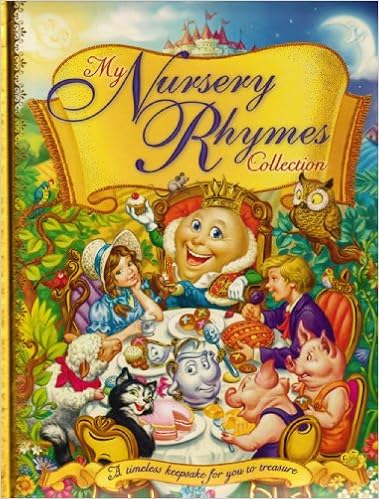
This hardcover is one of my daughter's favorites. It has 170 different nursery rhymes and folk songs and includes favorites like "Hickory Dickory Dock", "Brahms Lullaby", "All the Pretty Little Horses", "Hot Cross Buns", "Little Sally Walker", and SO many more.
Oh my daughter thinks this one is hysterical!
5) Incorporate singing into make believe/pretend play
When playing with doll, puppets, stuffed animals, house, or whatever it happens to be, we find was to incorporate music, whether that is different high or low voices for different characters, sing-songy play, or just expression. My daughter has Joy and Sadness plush toys from the Disney Movie, Inside Out and she makes their voices sound different. What a fun way to play with expression.
This summer we added nursery rhymes to our chalk time outside like this:
Little Miss Muffet
Jack Be Nimble
If you are a homeschool parent looking for ideas for school age children, I would also recommend looking into different music educator workshops in your state or area, attending conferences, and being a part of professional organizations like OAKE or NAfME to get more training and ideas. As a Kodaly trained teacher, I think it would be great for homeschool students because the voice is the primary instrument used. You could also look into Suzuki lessons for the child and parent to take together, but for the purposes of this post, I wanted to really focus on early childhood music in the home.
What are some of your favorite ways to make music with your kids? Sound off in the comments below!
Looking for some ideas for your elementary music classes in the days or weeks leading up to Thanksgiving?
1) Ho Ho Watanay - I used this song with kindergarten and first grade this week. In kindergarten it was perfect timing as we are practicing loud/soft and introducing the term "lullaby". We also tapped on the feathers to the feel of the music (preparing the steady beat). In first grade, we review the beat tapping page, but then take it a step further and look at the rhythm of the song. It is great ta and titi practice. We play the rhythms on hand drums as we sing.
2) Children's Literature for Thanksgiving in the Music Room
I introduce the song "Ho Ho Watanay" with the book "Northwoods Cradle Song". I sing the song on the page turns following every page that reads "Sleep, little warrior, sleep. Go to sleep. Go to sleep." I have looked all over for a song or melody to go with this book from the Menominee tribe, but have not found one yet. Ho Ho Watanay is actually an Iroquois lullaby, but because of the theme of the book and song, I pair them together.
I love to use the "I know an Old Lady..." books. I have several of them and they may great "fill in the blank" books as Jo Kirk would call them. I sing most of the book, but give the students a special part to sing, in this case the "perhaps she'll die". Thank goodness she doesn't die in this book. She just inflates until she becomes a balloon in the Thanksgiving Day parade. Hopefully none of us eat that much over Thanksgiving! ;)
3) Pumpkin Patch Rhythm Compositions
I had to be gone a couple days this month, so I left this "Pumpkin Patch Rhythm Composition" activity for a few classes while I was gone. It was easy for them to do while I was away, gave them more practice writing and working with a specific set of rhythms. I had them do these compositions with a partner and then on a later day, they combined with another pair and taught the other pair their composition and created one long composition out of the two that was 16 beats. The group of four then performed them for the class when I was there, so I was able to use it as a composition and performance assessment and assess two different skills. Working with a partner and then teaching their composition to another pair was really neat to watch. I could tell that because they were writing, manipulating, and teaching it, they really "got it".
My kids love rhythm races. They are fun and competitive. I love that it gives me a chance to see which kids really are getting it. I divide the class into teams. My classes have about 25 kids, so I do five teams with 4-5 kids on each team.
The teams stand in lines next to their team color turkey. I read/clap/or play a rhythm and one player from each team races to the other end of the room. When they get there, they see piles with turkeys of their team's color. They must locate the correct rhythm and bring it back to their team. The first team to bring back the correct rhythm gets 2 points. If they bring back a correct rhythm, but they are not first, they get 1 point for their team. If they bring back an incorrect rhythm, they get 0 points and they have to go take it back because they will eventually need to find that rhythm.
(Photo shared from the classroom of Shelley Potter).
I wanted to share something that worked for my sub while I had to be out of the classroom yesterday. I was introduced to the book, "Never Play Music Right Next to the Zoo" when a family member bought it for my daughter (Find it here on Amazon). She is two and LOVES listening to us read it. Since my husband is a band teacher, she is quite familiar with instruments and can name all of them and has been to many, many concerts between his 5-12 bands and my K-5 programs.
When I look for things to leave for a sub, I try to find things that a non-music sub can do. Books with recordings have worked really well for my subs and the students seem to really enjoy them while I am away.
I left this book and some extension activities for my K-2 classes yesterday and both the sub and the students really seemed to enjoy the book. It has a CD that narrates the story along with an accompaniment.
After they finished the book, students talked about concert etiquette. In the story, the boy falls asleep and the animals break out of their cages and take the stage as the musicians. So they talked about staying awake and paying attention when they go to concerts. They also recalled some of the instruments that were played in the book. 2nd graders were able to say what instrument families those belonged to.
Then, each student got a response sheet that asked them to draw (and write for the older ones) their favorite instrument from the concert outside of the zoo.
If you would like to use this mini lesson with your students or leave it for a sub, I have uploaded it for FREE on TpT. If you have my sub survival tub, you already have it!
If you have already used this book with your students before, please let me know if you do anything different with it. If you use this with your class, I would love to hear how it goes!
Make sure to hop over to Aileen's blog and see what other tried and true ideas music teachers are sharing!
I am linking up today with Emily's Kodaly Music. The topic for her books this week is "Night Time or Lullaby" books, so I thought I would link up and share a few of my favorites. You can check out her favorites by clicking the picture below. She blogged about "When You Wish Upon a Star" which is also one of my favorites. The illustrations are so beautiful!
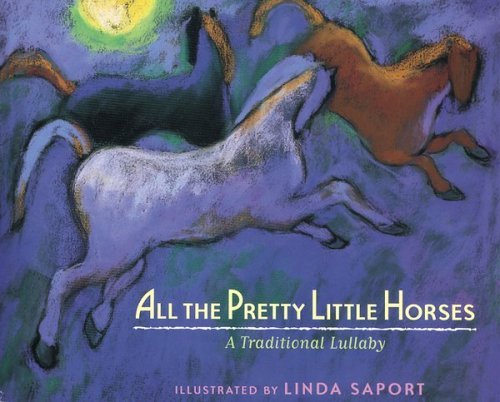
1) All the Pretty Little Horses
This book is great for teaching loud/soft, lullaby, and would also be a great choice to pull out in February for Black History Month. It is believed that this song comes from African American women, who would sing it to the children they were caring for as they were away from their own children.
2) Hush Little Baby
This is a great one to use in kindergarten with loud/soft. I picked it up at KMEA last year and actually love to use it at home with my 2 1/2 year old. It would be fun to use in your home if you have little ones, in early childhood music classes, and up to kindergarten, but I wouldn't go much past K with it.
On the pages before the lyrics, it shows the older sister knocking over the cradle, the baby crying, the older sister trying to soothe the baby (like the cover). The older sister goes with papa to find all of the different presents for the baby.
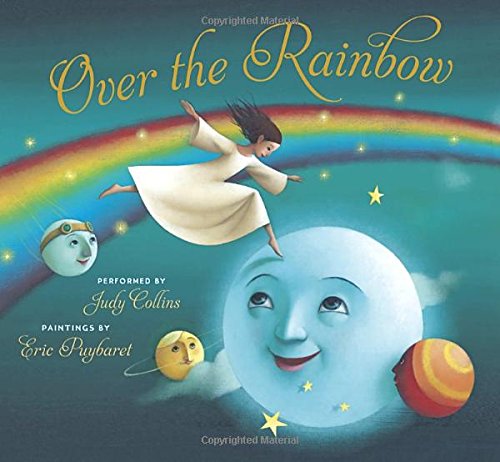
3) Over the Rainbow
I don't know if I just love this one because I am from Kansas and the connection to the Wizard of Oz, but this book takes the song out of Oz and sets it to some of the loveliest illustration by Eric Puybaret. I haven't connected this to any of the concepts in my sequence yet, I just love to sing it to my kids. It is good for them just to be sung (and read to) for the sake of hearing you sing expressively!
I hope you have enjoyed these book ideas and have found a new one to put on your wishlist or add to your collection!
What are your favorite books for night time/lullabies?
Kids love Halloween. As a kid, it was my favorite holiday. I loved getting to dress up and go trick or treating. Here are some of the tricks and treats from my music room this week:
Skin and Bones is so fun to play with any age! I turn the lights off, students sit in a circle and I go around the outside of the circle singing the song and I use an egg shaker to shake on the "oo's" just for a fun sound effect. On "boo" the whole class is usually scarred. I have best success with this game around 3rd grade, but it's fun all the way up through 5th grade. I've seen lots of fun variations on games for skin and bones on facebook recently. My favorite (though a little creepy) was to have the kids all lay on the floor and rise up to a sitting position on to "oo's" then lay back down. I will have to remember that for next year. This song is perfect because I am about ready to present low la! It is a really easy repeated part to play on the Orff instruments too.
This morning I did rhythmic dictation using Q tips as "bones" with my fifth graders. After a few practice rounds, they got to create their own four beat bone rhythm pattern. It was a little difficult to get the tiri-tiri's to stay so some are falling down, but you get the idea! They loved it!
Monster Mash Freeze Dance has been a big hit today. I play the song Monster Mash, but you could use any spooky dancable song. When I pause the music the kids have to freeze like the picture. This activity is fun way to get them moving and isolating different parts of their bodies. They have to think creatively for some to figure out how to make their bodies best match the pictures:
They have to really think creatively for some to figure out how to make their bodies best match the pictures:
During prep, we may just play a singing game. I play this one kind of like Closet Key. My students sit in a circle. I put a witch had in the middle and select a student to sit by the witch hat (they don't wear it because you just never know about head lice). I go around the circle with a penny and hide it in one student's hands. The witch has three guesses of where the penny is. The kids really enjoyed playing this game.
Reviewing high low in prep for sol-mi:
I found these great Halloween erasers at Target in the dollar bins to use on our high/low staff:
Pitch matching:
The students would not see this. Teacher sings "What will you be on Halloween night?" (s mm s m ss m s) Students answer in their singing voice with whatever they will be (ex. I will be a black cat - ss mm s m)
I cover a mallet with Kleenex and drew on eyes and a mouth and now have "Spooky the Ghost". The kids love to sing to Spooky. He can only hear us if we use our singing voices! :)
If you have a different Halloween puppet that would work too, but this is so easy to make!
Children's Literature:
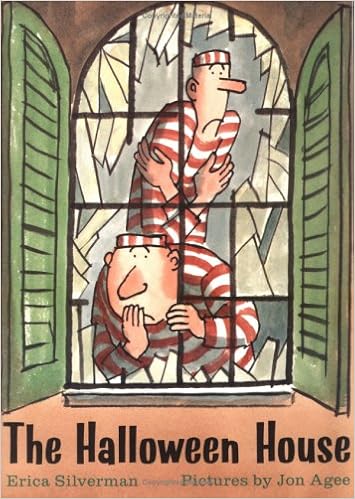
The Halloween House can be sung to the tune of Over in the Meadow. Instead of counting forwards, it counts backwards, which is a lovely skill to work on with kindergarten.
Here's a little video of me reading a portion of it so you can get the melody I use.
What's going on in your music room? Share some ideas in the comments!
Time for another 2-4 Tuesday! Thanks Steph for hosting this link up so that music teachers can share ideas!
Today I am going to share four books that I use in my music room for vocal exploration.
Click on the pictures to see where you can buy these great books!
My mother in law found the big book version of this. I LOVE it. After hearing a few verses, students are able to "fill in the blanks" by inserting the number of the phrases like "Over in the meadow in a snug beehive lived a mother honey bee and her little bees five." Great way to work on pitch matching and finding the resting tone.
I was introduced to this one in Level 1 with Jo Kirk. It has all kinds of opportunities for vocal exploration making train sounds, driving the six white horses, and chopping the old red rooster. I tell my students that my Aunt is visiting me all the way from New Orleans. I connect this story with the echo song "Aunt Came Back."
This has some opportunities for pitch matching and "fill in the blank" singing. There are lots of variations on this book that are seasonal and quite fun. I also have the Old Lady Who Swallowed the Leaves, Bat, Clover, Shell (Connect to song "Sea Shell"), Pie, and Bell.
This book is definitely my kids' favorite. This a modern tale of little bunny foo foo. He zooms through the forest on his motorcycles. We talk about Little Rabbit Foo Foo and how he needs to make good choices and show respect (two of our music room rules).
What are some of your go to children's books for vocal exploration? I am always trying to add to my library!
Have 2-4 music ideas to share? Link up by clicking on the 2-4 picture above.
Don't forget to check out my Monday Music Manipulatives Link Up: