menu   home About Me My Classroom Guest Post Workshops Guest Post
Showing posts with label Kodaly. Show all posts

Prepare Your Students for Music Centers

I had done a few different centers in the past, mostly with my upper grades, and not very well thought out. This year though, one of my personal goals was to incorporate centers in a way that was well-planned, gave students lots of ways to practice a concept, and gave me more than one way to assess students.

I'll have another blog post coming soon about the centers I did, or you can see a video of them on my Facebook page.


Today though I want to talk about how to prepare your students for centers in the music room. Before really diving in to centers this year, I talked to some classroom teachers to learn more about how centers worked in their rooms. Each person I talked to said, take the time to go over each center with the whole group before ever dividing the class for centers. Since I don't have as much time as a classroom teacher (my classes are 30 minutes and are back to back), I decided that instead of trying to cram it into the beginning of a class period and then starting centers that day, I would take a class period to discuss all my centers. 

So I'm going to share with you how that day went.


Since this was my first time doing centers at my new school with these students, I had no idea how long it would take to explain all of the centers and how everything would work. I figured if I have lots of extra time, we will play some singing games that I pulled patterns from for these centers, but this actually took about 25 minutes with both of my classes.

I brought my classes in and had them go to their assigned seats in front of the board. I said that we would be doing something kind of new in music the next few times we have class so I wanted to share with them about it today so that we could spend all of our time in centers the next two times. 

Instead of having all of the centers spread out around the perimeter of the room, which is where I put them when we were actually doing centers, I lined up all my centers at the front of the room under the board. 

On my computer, I had the zip file that contained all of the PDFs for each file pulled up so that as I was going through them with the whole group, if I wanted them to be able to see something better, I could show them the PDF version instead of the  tiny cards I was holding for some of the centers.

We walked through all of the centers in order. I read through the directions and we "played" each center one or two turns. For some centers I would have a small group of students come up and be the demonstration group as the class watched. I asked if there were any questions about each center before moving on to the next one. My students knew that they needed to ask any questions they had on this day so that they wouldn't come up asking me questions on the actual center days. The students were really interested and engaged the whole time. I think there was a little bit of mystery to it, like "OOO, I wonder what is going to be at the next center" or "I wonder what those manipulatives are going to be for" and that kept them really focused on what we were doing.

Students asked good clarifying questions about the individual centers. They also asked about their groups. I have about 28 kids in each class and set up 8 centers. Most of my groups had 4 students in a group, some had 3. I assigned all groups by typing up a list. I emailed the list to their teacher and asked their teacher to line them up in that order (so the four students in group 1 are first, followed by group 2 and so on....) the next time they came to music. I also had her double check my groups to see if there would be any issues that I maybe hadn't foreseen. This was a really good idea because the next time they came to music, I met them in the hallway and they were all in the right order. I had the centers so that center 1 was closest to the door and then they went in a circle around the perimeter of the music room, so as the students followed me in, I basically dropped off four at a time in the order they were in at each center as we went around the room and I was with the last 3 or 4 students at the "teacher center", center 8. I didn't have to waist any time putting kids in order or reviewing directions for any of the centers. I had directions for each center posted at each center in case they forgot or were absent when we went over the centers, but there seemed to be no issues with students knowing what to do at each center. I only had one student come up to me the entire two days of doing centers and it was because of an issue with a group member, so I think that is pretty darn good for our first time!

I hope this gives you maybe a new idea about how to prepare your students for centers so that they feel set up to succeed at each one without needing to ask questions during centers. I feel like taking that day to go over them at a relaxed pace, sending the centers groups to the teacher, and having students come to music on centers day already in order really helped everything to go smoothly.

Do you have other ideas that I haven't thought of? Share below!


Wanting to take the guesswork out of creating centers? Here are centers sets I've created and used with my classes:


Make It / Take It for Music Teachers


Last Winter I organized a Make It / Take It for the Kodaly Music Educators of Kansas.

I thought I would share with you what we did at this make it/ take it in case other districts, chapters, or groups of music teacher friends are interested in putting together their own "Make It / Take It".

We decided that we would make the following manipulatives/games at our workshop:

1) Solfege texting sticks
For this manipulative, each teacher got a set of Popsicle sticks and a pentatonic page of the texting tone ladders to cut out. We stuck them to the Popsicle sticks with rubber cement. It was a little sticky. Hot glue might work better, but glue along the top edges of the paper will help keep students from picking the paper off the sticks. Download a FREE template here.

(Photo credit: Jennifer Patterson)

A few ideas for using them:
-        Sing a known song on solfege and have students use finger to “text” the solfege as they sing
-        Sing a known song on words and have the students “text” the solfege
-        Sing do pentatonic melodic patterns and have students echo as they “text” the pattern
-        Sing melodic patterns on neutral syllable and have students respond with the solfege as they text. 

2) Foam rhythm cubes

Teachers got a set of 16 cubes. You can order them in bulk here. They could chose what rhythms to put on the sides. I really wanted a set for just ta, titi, ta rest, and takadimi (tika-tika, etc.), so I left two sides blank. Leaving those sides blank opens up the opportunity for student composing or improv if they can fill in their own rhythm on those empty beats. 


Ideas for use:
-        Students use the cubes in centers or small groups to find the rhythms of known songs (8 or 16 beats)
-        Compose new rhythm
-        Dictate 4 beat rhythm patterns
-     Compose or improvise new patterns on the blank cubes.

3) Sorted bags of colored transparent bingo chips to use on student high low charts or staves


There wasn't anything to make at this station, but a lot of teachers wanted these bingo chips to use on their high/low charts and staves. I have a high low chart, a staff without the clef, and a staff with the clef that is laminated for each student in my class. These chips are cool because although they are colored, they are transparent, so students can see the line going through the middle of them if it is supposed to be on a line and they fit between the lines perfectly for space notes. Each teacher got 250 chips and they could put however many they wanted in bags depending on their class sizes. You can order these chips in bulk here.

Ideas for use:
-        Use the chips to notate, dictate, or compose melodic patterns on student staff paper

4) Four Beat Heartbeat Charts


Teachers got 120 heart die cuts and 30 strips of paper that were cut/punched out ahead of time. They glued down the hearts four to a strip to create 4 beat heartbeat charts. 

Ideas for use:
-        Students may tap the beat to known folk songs or recorded music
-        Students use Popsicle sticks to dictate patterns on top of the heartbeats
-        Students use erasers, beads, etc. to show how many sounds they hear on each beat

5) I Have, Who Has game cards


I had a class set of "I Have, Who Has - Tika-tika" cards printed for KMEK members. If you want a ready to print set of cards, you can find them in my TpT store here (lots of different concepts are available), or you could create a rhythm list and create your own cards by handwriting them. If using my set with a big group of teachers, email me at lindsayjervis@hotmail.com for special pricing on additional licenses. The teachers who attended the workshop just had to cut them out and laminate them! 

Prep Work Before the Workshop

To prep for the make it / take it workshop, I spent a lot of time looking for ideas on Pinterest. I put together a Pinterest board with some ideas and let KMEK members comment in our Facebook group to say which manipulatives they would like for us to make. You can see the idea board here.
Once we decided what we were going to make, I ordered all of the materials. Some KMEK members helped in advance cutting out all of the heart die cuts cutting strips for the heart beat charts. Once we had enough materials for all of the participants, we sorted everything into bags for each teacher and I printed up a contents sheet with instructions and ideas for use for everything in the bag. Download the instructions page we used here and feel free to edit it for your own personal use!

Participants had to pre-register for the workshop so that we could anticipate how many sets of materials we would need to order. There was a lot of prep work that went into this workshop to make it a success, but it was a lot of fun, and our students got to have lots of new hands on manipulatives and games to use in music class as a result! It is always so much more fun to make these things with a group of friends than on your own, and you can benefit from buying in bulk if you are splitting the costs between several teachers.

Here are a few more photos of our make it / take it workshop:


If you have any questions about our make it/take it workshop or organizing your own, please do not hesitate to email me at LindsayJervis@hotmail.com


Thanksgiving Week {Take a Peek at my Week}

Looking for some ideas for your elementary music classes in the days or weeks leading up to Thanksgiving?


1) Ho Ho Watanay - I used this song with kindergarten and first grade this week. In kindergarten it was perfect timing as we are practicing loud/soft and introducing the term "lullaby". We also tapped on the feathers to the feel of the music (preparing the steady beat). In first grade, we review the beat tapping page, but then take it a step further and look at the rhythm of the song. It is great ta and titi practice. We play the rhythms on hand drums as we sing.

You can find slides for the song "Ho Ho Watanay" here. This file teaches loud/soft, lullaby, prepares and practices steady beat, prepares/practices rhythm of the words and ta/titi.

2) Children's Literature for Thanksgiving in the Music Room
I introduce the song "Ho Ho Watanay" with the book "Northwoods Cradle Song". I sing the song on the page turns following every page that reads "Sleep, little warrior, sleep. Go to sleep. Go to sleep." I have looked all over for a song or melody to go with this book from the Menominee tribe, but have not found one yet. Ho Ho Watanay is actually an Iroquois lullaby, but because of the theme of the book and song, I pair them together.


I used the book, "One Little, Two Little, Three Little Pilgrims" last week with kindergarten. They enjoyed comparing the lives of the pilgrims and Indians in the book. 


I love to use the "I know an Old Lady..." books. I have several of them and they may great "fill in the blank" books as Jo Kirk would call them. I sing most of the book, but give the students a special part to sing, in this case the "perhaps she'll die". Thank goodness she doesn't die in this book. She just inflates until she becomes a balloon in the Thanksgiving Day parade. Hopefully none of us eat that much over Thanksgiving! ;)

3) Pumpkin Patch Rhythm Compositions
I had to be gone a couple days this month, so I left this "Pumpkin Patch Rhythm Composition" activity for a few classes while I was gone. It was easy for them to do while I was away, gave them more practice writing and working with a specific set of rhythms. I had them do these compositions with a partner and then on a later day, they combined with another pair and taught the other pair their composition and created one long composition out of the two that was 16 beats. The group of four then performed them for the class when I was there, so I was able to use it as a composition and performance assessment and assess two different skills. Working with a partner and then teaching their composition to another pair was really neat to watch. I could tell that because they were writing, manipulating, and teaching it, they really "got it". 


4) Turkey Trot Rhythm Races
My kids love rhythm races. They are fun and competitive. I love that it gives me a chance to see which kids really are getting it. I divide the class into teams. My classes have about 25 kids, so I do five teams with 4-5 kids on each team.

The teams stand in lines next to their team color turkey. I read/clap/or play a rhythm and one player from each team races to the other end of the room. When they get there, they see piles with turkeys of their team's color. They must locate the correct rhythm and bring it back to their team. The first team to bring back the correct rhythm gets 2 points. If they bring back a correct rhythm, but they are not first, they get 1 point for their team. If they bring back an incorrect rhythm, they get 0 points and they have to go take it back because they will eventually need to find that rhythm.

(Photo shared from the classroom of Shelley Potter).


I hope you have enjoyed a peek at my week and some of the things I am doing right before Thanksgiving!


Dollar Day$ of Summer - Week 5

Thanks for joining Cori from Rhythm and Bloom and I for week 5 of Dollar Day$ of Summer. You can check in each week on my blog or on our Facebook pages (Rhythm and Bloom and Lindsay's Kodaly Inpsired Classroom) to see what will be the dollar deal of the week. This is a great way to stock up for next and snag some great deals!


If you missed the excitement last week, when you visit my store, you will see a "Dollar Day$ of Summer" banner. If you click on the banner, you will see the item in my store that is discounted to $1 for that week!


You can find all the participating deals by visiting my blog every Sunday/Monday of the summer. I will have a linky party at the bottom of my blog post with links to all the $1 deals. 

This week, my $1 deal is my connecting cultures bulletin board set. 


My intention with this bulletin board set was that you would print the pages with the folk songs from countries around the world and display them around a world map. You could then take yarn tied to push pins to connect the folk song to its country of origin.

Here are some pictures of it in use in other classrooms. 

Photo credit: Hannah De Meo

Photo credit: Hannah Mashburn

Other teachers have simply used this set to expand their collection of folk songs from around the world. Either way, it's a great grab at only $1!

If you have already used this set (or use it in the future) I would love to see pictures. You can post them to my Facebook page, Lindsay's Kodaly Inspired Classroom or you can email them to me at LindsayJervis@hotmail.com

Are you a seller on TPT and would like to link up? Here are the details:
1) Choose one item from your store and add a link below. You can link directly to the item on TPT or you can write a blog post about your awesome resource and link up with the blog post address. You do not have to have a blog to participate.
2) There will be 10 open spots each week and they are first come, first serve. 
3) If you link up, please share a link to my blog post with the link up on your social media to help others find out about these incredible deals!

Link up below:

KMEK Workshop Highlights

This Saturday, Kodaly Music Educators of Kansas hosted Amy Abbott from Music a la Abbott in Wichita for our Spring KMEK workshop.


Over 60 teachers from Kansas and neighboring states attended Amy's session, "Say, Say, Oh Playmate,"  which was packed full of fun singing games for upper elementary. Those are the kids that I am always finding I am needing additional resources and games for, or maybe I just get bored of some of the ones I have... I don't know. Either way, this session was just what we needed to motivate us to keep the joy going in the music class as the end of the year draws near.

Amy has so graciously said I can share some videos that fellow KMEK members shared and I will try to cite where the songs come from.

I definitely recommend looking into these sources for more information as well as having your local Kodaly chapter invite Amy out. I can say that she was definitely among my favorite presenters! :)

Little Swallow - stick passing game
Source: 150 American Folk Songs


Epo I Tai Tai - performed in 4 part canon.
Source: Amy learned this song from Susan Brumfield. If you have a primary source, please let me know.


One, Two, Three O'Leary


Crosstown (When Billy Was One)
Source: Amy learned this from Kathy Hickey. If you have more source information, please let me know!

Cobbler,Cobbler (Pass the Shoe)
Source: Jill Trinka


Have you played any of these before? I hope you enjoyed a peek into our workshop. We definitely have some amazing things going on in Kansas. We hope you can join us in Wichita for MKMEA 2015 this October!

Writing in the Music Room


I know that one of the things I have tried to do more this year is provide more writing practice on known concepts during our lessons. I hope to blog more about this topic in the future as it is an on-going goal to continually do more with this. It such a great way for me to have a chance to really see who is getting the concepts, and who may need more help and support. It is also good for assessment and many districts are experiencing a huge push towards writing with the Common Core.

My kiddos have been practicing la so I pulled out this song:

Here's how we play the game. One student is "it" and sits facing away from the class. The class sings the first two lines and one student who I choose sings the last line as a solo. The person who is "it" must guess who is the mystery singer. This song is a great opportunity for me to hear individuals and squeeze in some solo singing assessment when they think I am just keeping track of turns. Sometimes when I have a squirrely class that may sing silly I do tell them that I am taking a pitch matching grade, but usually I don't need to.

After playing the game we go to the board and read the song with melodic icons like these. They sing on text first as I point to the pictures, then we sing on solfa with hand sings. Eventually the icons move onto the staff and we show where la would live if sol and mi are on lines or spaces.


Then, instead of printing out a worksheet for each student, we did this page together, projected onto the board. We focused in on the second measure only and I had individual students come up to the board and fill in the note heads. Once all the note heads were added, we then added the stems and beams. Doing this together as a class is really helpful for the students who need to see it modeled before doing something similar on their own.  


If you are interested in the slides and printable/projectable worksheet that I used for "Johnny's It" you can find it here.

What are some of the most successful ways you incorporate writing in your music room?

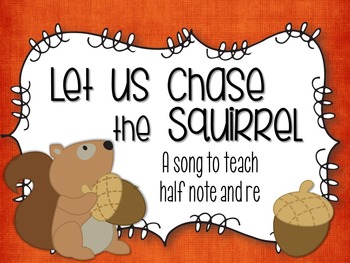
Folk Song Friday {Let Us Chase the Squirrel}

I am so excited to announce a new series on my blog: Folk Song Friday! I can't commit to or promise that every Friday I will have a new post up, but when I can, I hope to post one of my students' favorite folk songs and share with you what I do with that song in my classroom.


Song of the Week: Let Us Chase the Squirrel

Hardest Rhythmic Concept: half note (ta-a or ta-o)
Other Rhythms: ta and titi

Hardest Melodic Concept: re
Other Pitches: d m sl

I have two different games that I play with this song.

Game #1: Students are in long ways sets, forming arches with their partner as the "trees in the forest". Whenever the teacher plays on the triangle, the two students at the end of the set duck down and run up the trees going through the arches and forming a new arch at the end. The sets can travel all around the classroom this way.

Game #2: Students are in groups of three around a circle. Two form a tree and one is the squirrel under the tree. Any leftover students go to the middle of the circle and are squirrels. On the word "tree" all of the squirrels must go to a new tree and the squirrels in the middle can try to steal a tree. 


Here's a video of my students playing the second game:


If you are looking for visuals for the song, I've redone my "Let Us Chase the Squirrel" file to give it a fresh look and include slides for re. It has gone from 12 pages to 67!

If you own this file:
 Let Us Chase the Squirrel
It has now become this:


I project this page and have them tap along with the beat when I am working on half note prep. Eventually, the kids will find a sound that lasts for two beats.


I bring this song back out when we are working on the melodic concept, re. We play the game during re prep, and then after re has been presented, this song provides lots opportunity to practice re. On the slide below we would sing from icons on the staff.


Click on the pictures above to check it out if you are looking for  complete ready-made visuals for this song or to re-download and get the updates for free if you had purchased the older version!


Grab a FREE sample of this song file here. 


Do you have any other ideas, games, books, or visuals you use with "Let Us Chase the Squirrel"? Collaborate by sharing below in the comments!

Night Time and Lullaby Books

I am linking up today with Emily's Kodaly Music. The topic for her books this week is "Night Time or Lullaby" books, so I thought I would link up and share a few of my favorites. You can check out her favorites by clicking the picture below. She blogged about "When You Wish Upon a Star" which is also one of my favorites. The illustrations are so beautiful!


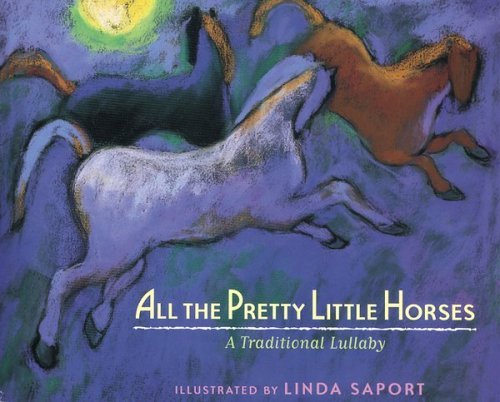
1) All the Pretty Little Horses


This book is great for teaching loud/soft, lullaby, and would also be a great choice to pull out in February for Black History Month. It is believed that this song comes from African American women, who would sing it to the children they were caring for as they were away from their own children.  

2) Hush Little Baby


This is a great one to use in kindergarten with loud/soft. I picked it up at KMEA last year and actually love to use it at home with my 2 1/2 year old. It would be fun to use in your home if you have little ones, in early childhood music classes, and up to kindergarten, but I wouldn't go much past K with it.

On the pages before the lyrics, it shows the older sister knocking over the cradle, the baby crying, the older sister trying to soothe the baby (like the cover). The older sister goes with papa to find all of the different presents for the baby.

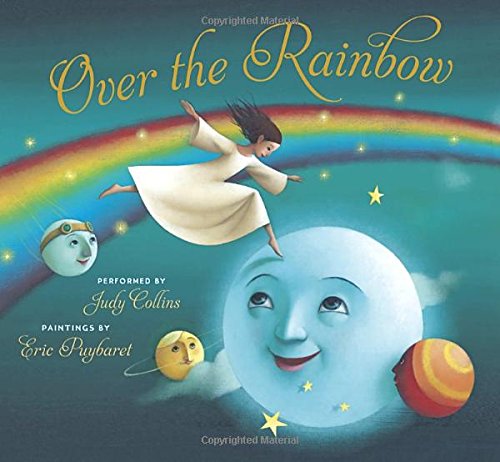
3) Over the Rainbow


I don't know if I just love this one because I am from Kansas and the connection to the Wizard of Oz, but this book takes the song out of Oz and sets it to some of the loveliest illustration by Eric Puybaret. I haven't connected this to any of the concepts in my sequence yet, I just love to sing it to my kids. It is good for them just to be sung (and read to) for the sake of hearing you sing expressively!

I hope you have enjoyed these book ideas and have found a new one to put on your wishlist or add to your collection!

What are your favorite books for night time/lullabies?